
The Nazca Lines have captivated researchers, archaeologists, and adventurers for decades.
Located in the desert region of southern Peru, these gigantic figures etched into the earth remain an unsolved mystery.
Who created them? What were they for? What is the best way to explore them?
In this article, we will take an in-depth look at their history, theories, ways to visit them, and the unique experience of flying over them with an adventurous focus.
The Nazca Lines: An enigma carved into the earth
The Nazca Lines are a group of geoglyphs located in the Nazca Desert in Peru.
They were declared a UNESCO World Heritage Site in 1994 and extend over 450 km².
These figures, some over 300 meters long, can only be fully appreciated from the air, making them one of the world’s greatest archaeological mysteries.
Their modern discovery is attributed to Peruvian pilot Toribio Mejía Xesspe in 1927, although it was German researcher Maria Reiche who dedicated her life to studying and preserving them.
How and why were these geoglyphs created?
The Nazca Lines were etched by the Nazca civilization between 500 BC and 500 AD.
They were created by removing the top layer of reddish earth to reveal the lighter soil underneath.
Thanks to the dry climate and lack of wind, the geoglyphs have remained intact for centuries.
Experts have proposed several hypotheses regarding their purpose:
- Religious and ceremonial functions: They could have been part of rituals to summon rain in one of the most arid regions in the world.
- Astronomical calendar: Some lines align with the sunrise and sunset during solstices and equinoxes.
- Pilgrimage routes: It is believed that some figures were walked upon as part of ceremonies.
- Signals for gods or extraterrestrials: A more esoteric theory suggests they were created to be seen from the sky.
The main figures and their meanings
Among the more than 800 geoglyphs found, figures of animals, plants, and geometric shapes stand out.
Some of the most famous are:
- The Hummingbird: A symbol of energy and speed.
- The Monkey: Related to rain and fertility.
- The Condor: Associated with the connection between heaven and earth.
- The Spider: Believed to have astronomical connotations.
- The Astronaut: One of the most enigmatic figures, representing an anthropomorphic being with large eyes.
Each figure could have had a ritual or astronomical meaning for the Nazca culture.
How to see the Nazca Lines: Options for explorers
The Nazca Lines can be observed in different ways, depending on your budget and the experience you want to have.
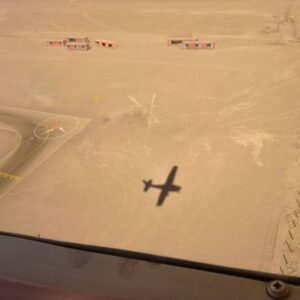
Flying over in a small plane: The ultimate experience
Without a doubt, the best way to appreciate the geoglyphs is on board a small plane.
This tour allows you to see the magnitude and perfection of the figures from a privileged perspective.
Specialized companies offer flights lasting between 30 and 45 minutes, with planes designed so that all passengers have an optimal view.
During the flight, the pilot performs maneuvers so that each figure can be observed from different angles.
The experience of flying over Nazca is incomparable.
From the moment the plane takes off, a sense of adrenaline and wonder takes over the passengers.
Condor Xtreme is one of the most recommended options for those looking for an exciting experience, combining safety and adventure in every flight.
Ground viewpoints: A more accessible view
For those who prefer a more affordable option, there are strategic viewpoints located on the Pan-American Highway.
Although the view is not as impressive as from the air, figures like the Tree and the Hands can be observed.
Specialized tours for adventurous travelers
In addition to the flight, some agencies offer complementary experiences, such as buggy excursions through the desert, visits to the Cantalloc aqueducts, and archaeological tours of the remains of the Nazca civilization.
Theories and mysteries: Who made them and why?
The Nazca Lines have been the subject of multiple theories over the years.
While the scientific community supports the idea that they were created by the Nazca people for religious and astronomical purposes, other hypotheses have captured the popular imagination:
- Alien hypothesis: Popularized by authors like Erich von Däniken, it suggests they were created by extraterrestrials or with their help.
- Star maps: Some theories claim that the lines represent constellations.
- Irrigation systems: Some archaeologists believe they were markers for organizing underground water channels.
To date, the mystery remains completely unsolved.
Tips for your trip to Nazca: Weather, prices, and best times
- Weather: Nazca is a desert area with temperatures that can exceed 30°C. It is recommended to bring sunscreen, sunglasses, and light clothing.
- Prices: The flight costs between 80 and 120 dollars, depending on the season.
- Best time to visit: From April to October, when the sky is clearer and there is less turbulence on flights.
- Extra recommendation: Book your flight in advance, as demand is usually high.
Exploring the Nazca Lines with Condor Xtreme
Flying over the Nazca Lines is an experience every traveler should have at least once in their life.
The feeling of being hundreds of meters above the ground, seeing perfect figures carved into the desert, is hard to describe.
Condor Xtreme offers a different experience for those looking for more than just a simple tourist flight.
From the very first moment, attention to detail and safety are priorities.
The excitement begins at takeoff, when the pilot announces that we are heading to the first figure.
The plane performs smooth maneuvers to ensure that all passengers can clearly see each geoglyph.
The most impactful moment is when figures like the hummingbird or the condor appear.
The precision with which they were created is amazing.
The feeling of flying over this mystical and ancient landscape is a combination of adrenaline, history, and wonder.
The legacy of Nazca and its impact on history
The Nazca Lines remain a mystery that defies time.
Beyond theories about their origin, their impact on culture, tourism, and archaeology is undeniable.
For those seeking an unforgettable experience, a flight over these geoglyphs is the best way to appreciate their grandeur.
The magic of Nazca lies not only in its lines but in the history and mystery that surround them.
Visiting this site means immersing yourself in one of the most fascinating civilizations of the ancient world, leaving an indelible mark on everyone who ventures to explore them.


Comments