
The Mystery of El Frontón Island, the Peruvian Alcatraz
El Frontón Island is one of the most enigmatic and history-filled locations on the Peruvian coast. Situated off the port of Callao, this island stands out not only for its natural isolation but also for the role it has played in various historical episodes that have marked the country. Its name evokes images of difficult times, reinforced by its nickname “Peruvian Alcatraz,” and it is a symbol of resistance, controversy, and memory. For decades, it was known primarily as a penitentiary center, but its relevance goes further, becoming a space that brings together nature, history, and myths.
History of El Frontón Island
Throughout its existence, El Frontón Island has witnessed a series of transformations that reflect the political and social changes in Peru. At the end of the 19th century, the Peruvian government decided to use the island as a maximum-security prison due to its strategic location, isolated by the Pacific Ocean. From that moment, the infrastructure began to be built that would turn it into a place destined to house prisoners considered dangerous or politically inconvenient.
In the first decades of the 20th century, El Frontón prison was used mainly to incarcerate common criminals, but also political prisoners during times of social upheaval. It was a space where stories of injustice, resistance, and repression converged, becoming a symbol of how institutions handled social control in times of crisis. Its physical isolation made living conditions extremely harsh, with a hostile environment that challenged both the physical and mental health of its inmates. 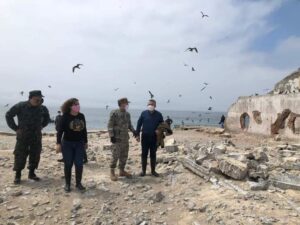
Over the years, the island established itself as a penitentiary center of great notoriety. In particular, during the 70s and 80s, the prison system at El Frontón was adapted to receive a larger number of political prisoners, in the context of the internal conflicts shaking the country. The growing tension between authorities and inmates generated episodes of violence that are still a subject of debate and reflection in Peruvian society today.
The architectural design of the facilities reflected the intention to create a practically impenetrable space. The cells were made to be small, gloomy, and difficult to escape from. Additionally, the constant presence of guards and strict surveillance reaffirmed the sense of isolation. However, despite these measures, the island was not exempt from escape attempts, some of which gave rise to dramatic tales that have contributed to the legendary aura of El Frontón.
The Peruvian Alcatraz
The notoriety of El Frontón Island as a high-security prison lies not only in its isolated location but also in the stories woven over the years. Its nickname as “The Peruvian Alcatraz” comes from the similarities it shares with the famous American island, both in its purpose and its design. Surrounded by the cold and rough waters of the Pacific Ocean, this prison was designed to prevent any escape attempt, taking advantage of its inhospitable environment as a natural barrier.
The architecture of El Frontón responded to the need for maximum security. Narrow cells with little lighting, built with robust materials, were combined with constant military surveillance to maintain control over the inmates. This relentless approach reflected not only concerns about possible escapes but also the intention to exert psychological dominance over the prisoners, whose life on the island became a daily challenge against loneliness and isolation.
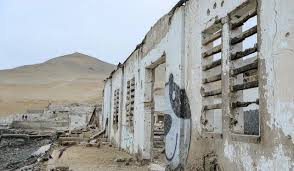 Despite the strict security measures, there were escape attempts that became part of the narrative of this place. Each attempt, failed or successful, is loaded with stories of ingenuity, desperation, and bravery, which only fed the legend of the island. These stories, though less documented compared to those of Alcatraz, are nonetheless fascinating, reflecting the constant struggle of inmates to regain their freedom in the face of extreme conditions.
Furthermore, the symbolism of El Frontón as an isolated prison served for decades as a tool of state power to exemplify the imposition of order and punishment. The island became a space charged with tension, where the surrounding waters were not just a physical obstacle, but also a reminder of the distance between the inmates and the rest of the world. In this context, the nickname “The Peruvian Alcatraz” is not simply a comparison, but a representation of its role within the prison system and its impact on the country’s history.
Key Events in the History of El Frontón
The 1986 riot at El Frontón marked a turning point in the history of this prison, sparking one of the most controversial and violent episodes in the Peruvian penitentiary system. During the internal conflict the country was going through, several prisoners linked to subversive movements like the Shining Path were held on this island, creating constant tension between authorities and inmates.
On June 18, 1986, amidst a series of simultaneous riots in different prisons across the country, an uprising broke out at El Frontón. The prisoners, in an act of defiance, took control of one of the prison blocks and demanded improvements in their confinement conditions, as well as more humane treatment. However, the government’s response was immediate and forceful. The Armed Forces intervened to quell the riot, using disproportionate force that resulted in a devastating confrontation. 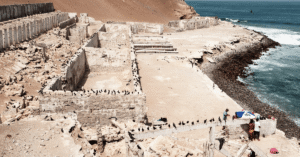
The operation to regain control of the prison included bombings that destroyed much of the infrastructure and caused numerous deaths. The exact details of what happened remain a subject of debate, as survivor testimonies and official versions often differ significantly. There is talk of extrajudicial executions, forced disappearances, and an extreme use of violence by the authorities, leading this episode to be considered a serious violation of human rights.
The consequences of the riot and its repression transcended the island’s borders, generating outrage both nationally and internationally. Various human rights organizations condemned the events and demanded investigations to clarify what happened. However, the lack of transparency and constant obstacles in judicial processes have hindered the search for justice for the victims and their families.
Despite the time that has passed, the 1986 riot remains a sensitive and controversial topic. It represents not only the harshness of the prison regime of the time but also the political and social polarization that marked Peru during those years. This event left deep scars on the country’s collective memory, reminding us of the extremes to which violence can go in contexts of internal conflict.
El Frontón Today
Today, El Frontón Island remains a place charged with symbolism and historical memory. Its crumbling structures and the desolate atmosphere surrounding it evoke the difficult realities lived there, serving as a testimony to the darkest episodes of Peruvian history. Despite its state of abandonment, El Frontón continues to be a point of interest for historians, human rights defenders, and those seeking to understand the impact of the prison system in Peru.
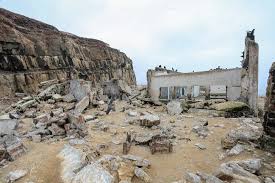 The island, which has restricted access, draws curious looks from a distance, particularly from the port of Callao, where the surrounding waters seem to act as a natural barrier, just as they did during its time as a prison. Amid debates on how to preserve this place, some suggest creating a memorial space or a museum that allows people to learn about the events that occurred there and reflect on the lessons of the past.
In recent years, various organizations have expressed interest in protecting the site to prevent its legacy from being lost over time. However, the lack of resources and concrete agreements has caused these projects to move slowly. The collective memory linked to El Frontón, though complex and sometimes painful, continues to be a recurring theme in discussions about justice and reconciliation in Peru.
Cultural Impact and Legacy of El Frontón
The cultural impact of El Frontón Island is reflected in how its history has been interpreted and reimagined through various artistic expressions and narratives that seek to keep its memory alive. The island, with its symbolic weight and connection to some of the most complex moments of Peru’s past, has served as a powerful catalyst for artistic creation, allowing present and future generations to reflect on the events that took place there and their implications for society.
In literature, El Frontón has been a recurring setting for works exploring themes of repression, human suffering, and the contradictions of the justice system in Peru. Peruvian writers have used the island as a metaphor for isolation and resistance, weaving stories of fictional characters who embody the ethical and social dilemmas that arose in that place. These works not only illuminate specific aspects of life on the island but also invite readers to question the power structures and dynamics of exclusion that still persist.
Cinema and documentaries have also played a crucial role in maintaining the memory of El Frontón. Through productions ranging from fiction films to documentary records, the events that occurred on the island have been reconstructed, allowing a wider audience to access these stories. These visual representations, often accompanied by survivor testimonies, have managed to convey the harshness of what was lived on the island, contributing to the debate on historical truth and the need for justice. In particular, documentaries have served as a tool for denunciation, revealing the inhumane conditions that prevailed in the prison and the abuses committed during episodes like the 1986 riot. 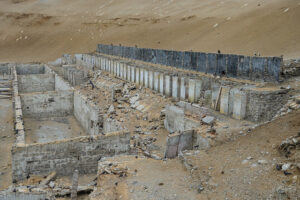
On the other hand, visual arts have also found a source of inspiration in El Frontón. Paintings, photographs, and art exhibitions have portrayed the desolation of the island’s landscape and the scars left by its history. These works, often loaded with symbolism, invite introspection on the impact of violence and repression on Peruvian society. Furthermore, they have been a means to channel collective grief and transform pain into a call to action, promoting memory as a tool of resistance against forgetting.
In academic terms, El Frontón has been the subject of numerous studies addressing everything from its function as a prison to its meaning in the Peruvian collective imagination. Historians, sociologists, and anthropologists have explored how the events on the island reflect broader tensions within Peruvian society, from structural inequalities to political and ideological conflicts. This research has enriched the understanding of El Frontón, offering perspectives that go beyond historical facts to encompass its cultural, social, and symbolic dimensions.
Music has also played a part in perpetuating the legacy of El Frontón. Songs inspired by the resistance and suffering of the prisoners have found an echo in genres like música criolla and Peruvian rock. These compositions not only pay tribute to those who lived and died on the island but also function as a reminder of the importance of fighting for human rights and dignity, even in the most adverse circumstances.
Finally, the debate over the future of the island remains a reflection of its cultural relevance and its impact on collective memory. The discussion about the possibility of turning El Frontón into a memorial space or a museum seeks not only to preserve history but also to foster a critical dialogue about the mistakes of the past. This proposal highlights the need to reconcile with the traumatic events of the country’s history so they can serve as lessons to guide toward a more just and equitable future.
In essence, El Frontón has transcended its status as a prison to become a powerful symbol of resistance, injustice, and memory. Its legacy lives on in the multiple ways it has been represented and discussed in Peruvian culture, reminding us that, although time passes, history and its lessons must remain present.


Comments