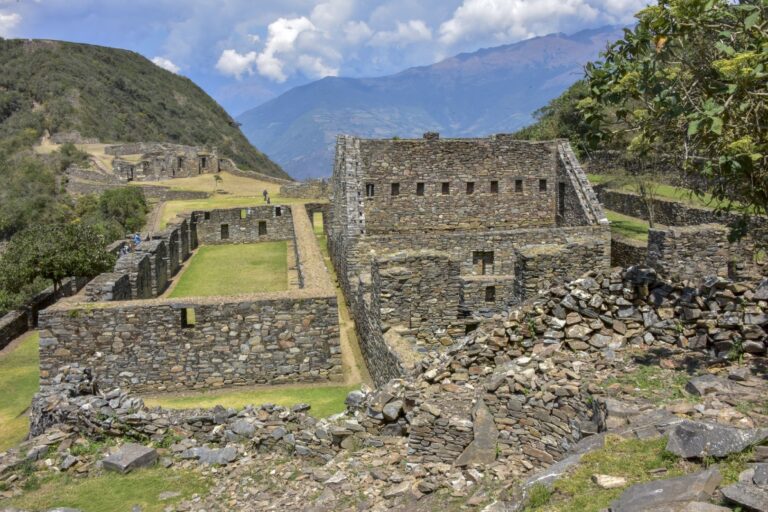
Choquequirao Cusco: A Hidden Treasure in the Peruvian Andes
Located high in the Peruvian Andes, Choquequirao is one of the best-kept secrets of the Inca civilization. This impressive archaeological complex, surrounded by a mountainous landscape of incomparable beauty, combines history, nature, and culture in one place. Despite its historical importance, remote access has allowed it to retain an air of mystery and authenticity that sets it apart from other more crowded tourist sites.
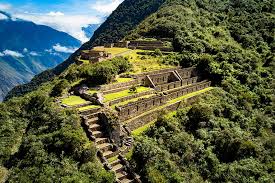
Choquequirao fascinates both for its strategic location and its architectural design, which reflects the wisdom and mastery of the Incas in construction. Among its structures are agricultural terraces that descend in perfect harmony with the geography, ceremonial buildings, and pathways that connect different areas of the site. All of this is surrounded by an atmosphere of tranquility that invites visitors to step back in time and immerse themselves in the legacy of an advanced civilization. 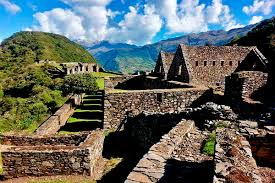
Although less well-known than Machu Picchu, this place offers an equally impressive experience, especially for those who enjoy adventure and contact with nature. The hikes to the site cross landscapes ranging from deep canyons to lush mountains, creating a unique connection with the environment. This isolation has made Choquequirao maintain an exclusive and special character, where the visitor becomes an explorer rather than a tourist.
Beyond its ruins, the surroundings of Choquequirao are also a place of rich biodiversity. Its location in the cloud forest allows a variety of ecosystems to coexist, making the visit an experience that goes beyond the archaeological. Every corner seems designed to surprise, from the majestic views to the details that reveal the daily life of the ancient inhabitants.
Those who venture to discover Choquequirao find not only an archaeological site, but a setting where history and nature intertwine in a magical way, offering an unforgettable journey for lovers of culture and exploration.
How to Get to Choquequirao
The most commonly used route to reach Choquequirao begins in the picturesque town of Cachora, located a few hours by car from Cusco. This initial journey offers a glimpse of the Andean environment that accompanies travelers throughout the adventure. From Cachora, the hike extends for approximately 30 kilometers, crossing impressive canyons and challenging slopes that lead to the Inca citadel. Along the way, visitors are greeted by landscapes that vary from deep valleys to high mountains covered with vegetation.
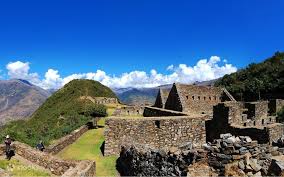 Another less crowded option starts in the village of Huanipaca, ideal for those seeking a different and less traveled experience. Both routes require a good level of physical preparation due to the demanding nature of the trails. The constant ascents and descents, along with the changing climate of the region, make it essential to have the right equipment. Comfortable clothing, sturdy footwear, and protection against sun and rain are essential to face the conditions of the trail.
Along the way, it is possible to find strategic camping points where you can rest and replenish energy before continuing the journey. Some of these sites offer spectacular views of the canyons and the Apurímac River, which accompanies much of the route. In addition, contact with local communities provides a unique opportunity to learn more about the culture of the region and receive practical advice about the trip.
While it is possible to do the hike independently, many choose to hire the services of local guides or specialized agencies. These services usually include transportation, camping equipment, and meals, which facilitates the logistics of the trip and allows travelers to focus on enjoying the environment. The guides also offer valuable information about the history of Choquequirao and the cultural importance of the site.
Architecture and Design of Choquequirao
The architectural design of Choquequirao reflects a harmonious integration between nature and Inca engineering. Every detail in the arrangement of its structures shows a deep knowledge of geography and the environment. The agricultural terraces, distributed on steep slopes, were not only essential for agriculture, but also helped prevent erosion, showing a perfect symbiosis between functionality and aesthetics. These terraces, carefully built with stone walls, adapt to the topography and demonstrate meticulous planning.
One of the most fascinating elements of Choquequirao is the presence of platforms decorated with geometric figures and representations of llamas, carved into the terraces. This artistic detail highlights the symbolic connection between architecture and the natural environment, with llamas being a sacred animal for the Incas and a fundamental resource in their economy. 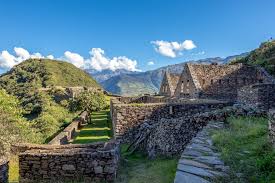
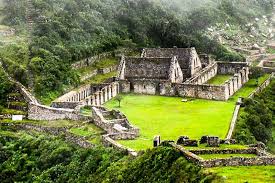
The main buildings, such as the ceremonial plazas and residential enclosures, are distributed on different levels, connected by a network of stone staircases. This multi-level design provides spectacular views of the surrounding landscape, as if the complex were designed to integrate completely with the mountains and valleys that surround it. The orientation of these structures seems to have been carefully planned to maximize exposure to sunlight, a vital resource for daily and ceremonial activities.
In addition to the visible elements, the construction techniques of the Incas stand out for their sophistication. The stones that make up the structures are carefully cut and assembled without the use of mortar, a technique known as Inca masonry. This skill allowed many structures to survive centuries of exposure to the elements and seismic movements, a characteristic that continues to amaze archaeologists and visitors.
In the ceremonial sectors, the fountains and water channels are another testament to the hydraulic ingenuity of the Incas, designed not only to supply water to the site, but also for ritual purposes. These elements underscore the importance of water as a symbol of life and spirituality in the Andean worldview.
The Choquequirao Hiking Experience
The hike to Choquequirao is an immersive experience that allows adventurers to enter landscapes of extraordinary beauty and diversity. From the beginning of the journey, the trails offer a display of natural scenery ranging from deep canyons to mountains covered with lush vegetation. The variety of ecosystems along the way is impressive, providing the opportunity to observe unique flora and fauna of the region, such as orchids, ferns, and birds like the Andean condor.
The route is designed for those who enjoy a physical challenge and connection with the environment. The paths, mostly steep, require effort and endurance, but each step is rewarded with spectacular views of the Apurímac River and the imposing Andes that surround it. The rest points strategically located along the trail not only allow you to replenish energy, but also offer unforgettable panoramas that invite contemplation.
 One of the most outstanding aspects of this journey is the opportunity to interact with the local communities that inhabit the area. These communities, with their warmth and hospitality, share stories, traditions, and practical knowledge about the region, enriching the visitor’s cultural experience. In addition, some of the campsites along the way are managed by the inhabitants themselves, who offer basic services and guides to improve the logistics of the trip.
As you advance, the isolation of the trail and the absence of large crowds generate a sense of exclusivity, allowing travelers to enjoy an intimate connection with nature and history. The sounds of the wind, the singing of birds, and the murmur of water accompany the visitor, creating a serene and unique atmosphere. The most demanding sections of the trail lead to points where the horizon seems endless, recalling the grandeur of the Andean landscapes.
For those seeking a more organized experience, it is also possible to opt for specialized guide services that provide support in transporting equipment and ensure a more comfortable trip, without detracting from the authenticity of this unforgettable adventure.
Flora and Fauna in Choquequirao
The biodiversity surrounding Choquequirao is one of its most fascinating features and an additional reason to venture to this magical place. The ecosystems found in the cloud forest and the high Andean mountains create an ideal habitat for a wide variety of flora and fauna species. Along the trails and around the citadel, you can find plants such as bromeliads, giant ferns, and orchids, whose flowers add touches of color to the natural landscape. Some of these plants, in addition to being visually impressive, have traditional uses in local communities, either in medicine or as part of their cultural heritage.
As for fauna, the territory is a safe home for several emblematic species of the Andes. Among the most notable animals are the spectacled bear, an endangered species that finds refuge in the forests of this region, and the white-tailed deer, which frequents the denser and quieter areas. The skies of Choquequirao are also the scene of unforgettable sightings, especially of the majestic Andean condor, which with its enormous wings glides over the canyons and mountains, offering a unique natural spectacle. 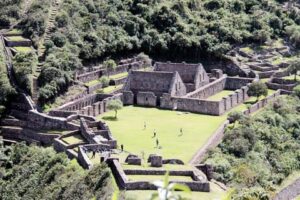
The small streams and water sources that flow in the region attract birds such as the cock-of-the-rock, considered the national bird of Peru, and other species such as hummingbirds, whose agility and vibrant colors capture the attention of hikers. In addition, amphibians and reptiles, although less visible, play an essential role in the balance of local ecosystems. Snakes and lizards, adapted to the mountainous environment, are part of this delicate natural habitat.
This diversity of wildlife and vegetation not only enriches the visitor’s experience, but also reinforces the importance of keeping the environment protected. While walking the trails to Choquequirao, the opportunity to observe these beings in their natural environment is a constant reminder of the intrinsic connection between human history and nature.
Conservation and Sustainable Tourism in Choquequirao
The preservation of Choquequirao is a challenge that requires a balance between allowing access to this incredible site and ensuring the protection of its cultural and natural wealth. One of the main approaches has been to promote responsible tourism, educating visitors about the importance of respecting both the archaeological ruins and the natural environment. This includes avoiding leaving waste, not damaging historical structures, and following established trails to minimize impact on local flora and fauna.
Nearby communities play a fundamental role in the conservation of the site. Their active participation in tourism management, through the provision of services such as guides, camping accommodations, and transportation, not only provides them with economic opportunities, but also ensures that tourism development is aligned with local needs and the protection of cultural heritage. In addition, their ancestral knowledge contributes to the preservation of sustainable practices that have been passed down from generation to generation.
 Initiatives are being developed to control the flow of visitors and avoid overexploitation of the site. These include promoting less traveled alternate routes and implementing daily quotas to regulate access. In this way, the aim is to preserve the unique experience of exploring Choquequirao while protecting its integrity.
Archaeological research and restoration programs are also being carried out in order to better understand the historical value of Choquequirao and preserve its structures. These investigations allow the site to be appreciated not only as a tourist attraction, but as a symbol of Peru’s cultural heritage.
Finally, the commitment of travelers is crucial to ensure sustainable tourism. Respecting established norms, valuing the work of local communities, and promoting environmental awareness are essential steps so that this Inca treasure continues to be a magical place where history and nature coexist in harmony.


Comments