Ollantaytambo: A Journey to the Heart of the Inca Empire
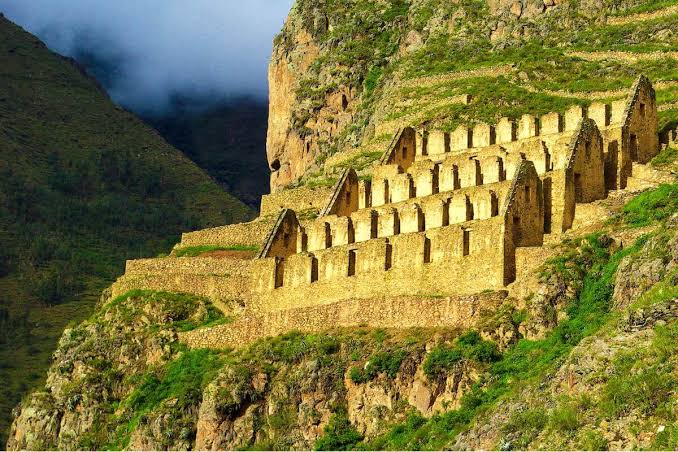
Located in the heart of the Sacred Valley, Ollantaytambo stands out as an extraordinary example of Inca cultural and architectural heritage. This place combines natural beauty and a rich history that can be felt in every corner of the site. Surrounded by imposing mountains and crossed by ancient Inca roads, the town of Ollantaytambo and its archaeological complex transport visitors to a time when the connection between humans and their environment was fundamental.
The archaeological site of Ollantaytambo impresses not only with its size, but also with the details of its design. From its perfectly constructed terraces to its stone buildings, each element seems to have been carefully planned to harmonize with the landscape and meet the needs of its population. Walking along its ancient paths, between stone walls that seem to tell stories, is an experience that allows you to imagine the daily life of those who inhabited this place.
In addition to its archaeological value, the setting of Ollantaytambo makes it a unique destination. The sound of water flowing through its channels, the whisper of the wind among the mountains, and the majesty of its architecture invite a deep connection with nature and history. This sacred place served not only as an agricultural and military center, but also as a space filled with spiritual meaning for the Inca civilization.
History of Ollantaytambo
Ollantaytambo was a key setting during the period of expansion of the Inca Empire and, later, in its resistance against the Spanish conquest. Originally built as a ceremonial and administrative center under the rule of Pachacútec, the site also fulfilled strategic functions due to its geographical location in the Sacred Valley. The urban and military planning of the place reflects the Incas’ vision to integrate their infrastructure with the natural defenses of the terrain.
During the Spanish incursions, Ollantaytambo became a bastion of resistance for the Inca leader Manco Inca Yupanqui. This site witnessed intense battles in which the Incas managed to confront and, at times, repel the advances of the conquistadors. One of the most notable episodes occurred in 1536, when Manco Inca, using his knowledge of the terrain and hydraulic systems, flooded the surrounding fields to hinder the advance of Spanish troops. Although he eventually had to retreat, these confrontations left an indelible mark on the history of Ollantaytambo as a symbol of the struggle for Inca sovereignty. 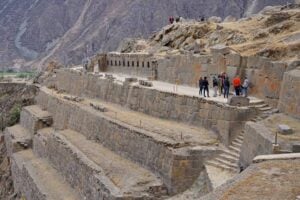
The structure of the site, with its combination of agricultural terraces, religious enclosures, and fortifications, also illustrates how the Incas designed multifunctional spaces capable of serving both in times of peace and in times of war. The massive stones used in the constructions and the sophisticated water distribution systems highlight the level of technological development achieved by this civilization. On the other hand, the urban design in the neighboring town still preserves the original Inca layout, offering a unique glimpse into the past.
The relevance of Ollantaytambo as a strategic point was not limited to its military use. It was also a vital node within the vast network of Inca roads that connected different regions of the empire. Its role as a link between the Andes and the Amazon demonstrates the importance of this site not only for logistics and trade, but also as a cultural and spiritual space. The archaeological remains present today allow us to reconstruct fragments of these dynamics, narrating stories of a people who left a lasting legacy in every stone and path.
Architecture and Design
The architecture of Ollantaytambo reveals a deep knowledge of engineering and a singular harmony with the natural environment. One of the most notable elements is the use of enormous stone blocks that were transported from distant quarries, a process that still intrigues archaeologists due to its complexity. These stones were carefully worked and assembled with such precision that no mortar is required to hold them in place, defying the passage of time and natural phenomena.
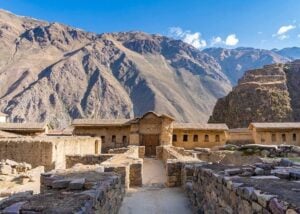 The urban design of the site is organized around terraces and enclosures that combine agricultural, ceremonial, and defensive functions. The sloping walls and trapezoidal doors are architectural features that not only provide stability to the structures, but also display an aesthetic that reflected the beliefs and values of Inca culture. The terraces, in addition to their agricultural utility, served to maximize the use of space on mountainous terrain and ensure protection against erosion, integrating functionality with respect for nature.
Among the most emblematic buildings is the Temple of the Sun, an unfinished structure that demonstrates the level of sophistication achieved by the Incas in stonework. This temple is composed of monoliths carved with geometric perfection that suggests a ceremonial purpose linked to sun worship, central to the Inca worldview. In addition, the stairways and passages that connect different levels of the complex reflect meticulous planning, designed both to facilitate transit and to highlight the monumentality of the space.
Another notable aspect of Ollantaytambo is the strategic orientation of its structures. Many of them seem to align with astronomical phenomena or specific geographical elements, suggesting a spiritual link with the environment and an advanced understanding of astronomy. This integrative design not only responds to practical needs, but also reinforces the symbolic connection between sky, earth, and humanity.
The Importance of Water
Water played an essential role in the functioning of Ollantaytambo, both in practical and spiritual aspects. The Incas managed to design an advanced hydraulic system that allowed them to make the most of this vital resource in a mountainous environment. Through channels carved in stone, water was conducted from natural sources to the agricultural terraces, ensuring uniform and efficient distribution for crop irrigation. This system not only guaranteed the productivity of the land, but also reflected a deep respect for natural elements. 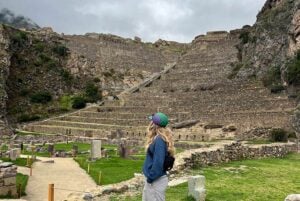
One of the most fascinating aspects of these hydraulic systems is the precision with which they were built. The channels are designed to avoid water waste, using a carefully calculated slope that regulates flow and prevents flooding. Some of these channels connect with decorative fountains that probably had a ceremonial purpose, highlighting the functional and symbolic duality that characterized Inca engineering. These fountains, moreover, seem to have been carefully located to align with points of religious or astronomical importance.
The design of Ollantaytambo allows us to observe how water is integrated into the daily and spiritual life of the community. Its constant flow, visible and audible in many corners of the complex, reinforces the idea that this resource was not only a means of subsistence, but also a sacred element.
The Connection with Machu Picchu
The ancient Inca roads that connect Ollantaytambo with Machu Picchu represent one of the masterpieces of Inca engineering and planning. These paths, known as the Qhapaq Ñan, were part of a road network that united vast regions of the empire and allowed the efficient circulation of people, goods, and information. The specific route between Ollantaytambo and Machu Picchu stands out not only for its historical importance, but also for the impressive natural landscapes it crosses, from fertile valleys to high mountain areas covered by subtropical vegetation.
The journey between both sites includes a series of structures and stations that the Incas built as rest stops or control points. These strategic constructions, known as tambos, provided shelter and storage for travelers who covered long distances. In addition, they served to maintain the continuous flow of resources and messages within the empire. The location of these tambos, carefully selected, demonstrates detailed planning that took advantage of the geographical characteristics of the terrain, ensuring the supply and protection of travelers.
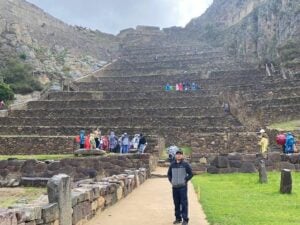 A fascinating aspect of this road is its design, which follows a layout harmonious with the topography, respecting the mountains and valleys instead of trying to dominate them. The carved stone stairways, suspension bridges, and terraces integrated into the landscape demonstrate a sustainable approach to construction. This respect for the natural environment not only guaranteed the functionality of the road, but also reflected the spiritual beliefs of the Incas, who considered mountains and rivers to be sacred.
Today’s visitors who travel this route have the opportunity to experience firsthand the spiritual connection that the Incas felt with nature. Along the way, it is possible to observe the rich biodiversity of the region, including native flora and fauna species that are part of the unique ecosystem of the Sacred Valley and the Andean region. The landscapes change as the path advances, providing an immersive experience that combines history, nature, and adventure.
The symbolic relationship between Ollantaytambo and Machu Picchu is also manifested in their architecture and purpose. Both places functioned as centers of power, spirituality, and knowledge, with complementary roles within the Inca political and religious system. The similarities in the design of their terraces, temples, and channels suggest a connection not only physical, but also cultural and spiritual between the two sites. .
Ollantaytambo Today
At present, Ollantaytambo has become an internationally renowned tourist destination, attracting visitors from around the world who seek to experience the historical and cultural richness of the Sacred Valley. This town, with its Inca urban design still intact, is a living example of how local communities have managed to preserve their heritage while facing the challenges of modern development.
Tourism in Ollantaytambo has significantly boosted the local economy, generating employment opportunities in sectors such as handicrafts, gastronomy, and tourism services. Local markets offer unique products that combine ancestral traditions with contemporary touches, from hand-woven textiles to jewelry inspired by Inca symbols. In addition, the restaurants and accommodations in the area reflect an effort to highlight regional gastronomy, based on native ingredients such as quinoa, corn, and potatoes.
However, tourism growth has also raised the need to establish conservation and sustainability measures. The pressure on natural resources and the impact on archaeological structures are concerns that require constant attention. Local and international organizations, together with the community, work to implement strategies that balance heritage preservation with tourism demands. Education and awareness projects seek to involve both visitors and residents in protecting the environment and traditions. 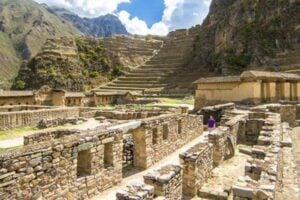
The community of Ollantaytambo plays a central role in keeping its cultural identity alive. Festivities such as Inti Raymi and other religious and agricultural celebrations are carried out with fervor, connecting the inhabitants with their roots while sharing these experiences with visitors. These cultural manifestations not only enrich the tourist experience, but also reinforce the sense of belonging among the residents.
In terms of infrastructure, the town has improved its connectivity and accessibility, allowing a more efficient flow of tourists without compromising its historical essence. In addition, initiatives have been promoted that encourage responsible tourism, such as guided walks by community members and educational workshops on local history and traditions. These activities not only offer a more authentic experience, but also foster an enriching cultural exchange.
On the other hand, the natural environment surrounding Ollantaytambo continues to be an essential element in the daily life of the town. The mountains, rivers, and landscapes of the Sacred Valley are not only part of the tourist attraction, but are also fundamental for agriculture and other traditional activities. The community has adopted sustainable practices to ensure that these resources continue to benefit future generations.
Ollantaytambo today is a place where the past and present intertwine harmoniously. The conservation of its historical and natural legacy, together with the development of conscious tourism, ensures that this town remains not only an emblematic destination in Peru, but also an example of resilience and cultural adaptation.


Comments